


| Issue |
Radioprotection
Volume 61, Number 1, Janvier-Mars 2026
|
|
|---|---|---|
| Page(s) | 22 - 29 | |
| DOI | https://doi.org/10.1051/radiopro/2025034 | |
| Published online | 20 March 2026 | |
Article
Dismantling of nuclear facilities, radioactive waste and materials management, circular economy and sustainable development
1
CEPN, 28 rue de la Redoute, 92 260 Fontenay aux Roses, France
2
Andra, 1 rue Jean Monnet, 92298 Chatenay-Malabry Cedex, France
3
Cyclife Sweden AB, Box 610, SE-611 10 Nyköping, Sweden
4
Tractebel Engineering S.A., Boulevard Simon Bolivar 36, B1000 Brussels, Belgium
5
SOGIN, Via Marsala, 51C-00185, Roma, Italy
6
ÚJV Řež, a. s., Hlavní 130, 250 68 Husinec, Czech Republic
7
Galson Sciences Ltd, 5 Grosvenor House, Melton Road, Oakham, Rutland, LE15 6AX, UK
* Corresponding author: This email address is being protected from spambots. You need JavaScript enabled to view it.
Received:
28
July
2025
Accepted:
9
September
2025
Abstract
Decommissioning of nuclear facilities and sites’ clean-up can lead to the production of significant amount of radioactive waste and materials: steel, concrete, soils, etc. Traditionally, these activities have been managed according to radiation protection criteria, such as clearance levels based on a 10 µSv.year-1 criterion. However, the volumes of waste and materials involved are leading many countries to question their strategy, considering for instance the risk of saturation of radioactive waste storage buildings and repositories, or even the absence of storage facilities. Production of large volumes of waste may also be considered in contradiction to the principles of the circular economy promoted by the European Union, sustainable development objectives and even the views of some stakeholders. As part of the HARPERS project, funded by the European Commission, several case studies on the implementation of good practice for the management of radioactive waste and materials have been investigated to identify useful lessons from a circular economy perspective, both in terms of standards and regulations and operational aspects. This article highlights some of the main findings.
Key words: Circular economy / radioactive waste / decommissioning / clearance / waste management hierarchy
© L. Vaillant et al., Published by EDP Sciences 2026
 This is an Open Access article distributed under the terms of the Creative Commons Attribution License (https://creativecommons.org/licenses/by/4.0), which permits unrestricted use, distribution, and reproduction in any medium, provided the original work is properly cited.
1 Introduction
The overall objective of the European Union’s transition from a linear economy to a circular economy is to contribute to reducing pressure on natural resources while creating sustainable growth and jobs. As already highlighted in the 1987 Brundtland Report (WCEP, 1987) ‘The overriding policy objective must be to reduce the amount of waste generated and to transform an increasing amount into resources for use and reuse. This will reduce the volume that otherwise must be treated or disposed of through incineration, land disposal, or dumping at sea. […] Promoting the reclamation, reuse, or recycling of materials can reduce the problem of solid waste, stimulate employment, and result in savings of raw materials.’. According to the United Nations Environment Programme, extraction and processing of natural resources account for about half of all global greenhouse gas emissions. In a circular economy, the value of products, materials and resources is maintained for as long as possible and the generation of waste is minimized. The principles of the circular economy approach are:
Recovery and reuse;
Repair and reuse;
High-quality recycling;
Innovation and ecological design;
Waste reduction.
The EC funded HARPERS project (www.harpers-h2020.eu) aimed to establish and clarify the benefits and added value of more harmonized regulations and standards for prioritized topics related to decommissioning and radioactive waste management. Among other topics, the project addresses the conditions and opportunities for promoting circular economy approaches when managing materials and waste arising from nuclear decommissioning across Europe. Indeed, case studies outlining implementation of circular economy approaches and technologies to the decommissioning of nuclear facilities and related radioactive waste and materials management, were collected and analysed. The objective was to collect useful information and lessons learnt to support future approaches for minimising waste and recovering and reusing valuable materials. This article provides an overview of some of these case studies, and discusses lessons learnt from circular economy and radiological protection perspectives.
2 Dismantling nuclear facilities at the Casaccia research centre in Italy (Cardellicchio S., 2024)
The Casaccia research centre, located 30 km north-west of Rome, is a R&D site. In 2003, two nuclear facilities of the research center were transferred to Sogin for decommissioning purpose, the IPU plant and the OPEC plant. The IPU plant was a pilot-scale MOX fuel fabrication plant operating from 1968 to 1986. The OPEC plant was dedicated to irradiated fuel examination. It consists of 2 buildings, OPEC-1 and OPEC-2. OPEC-1 hot cells plant was built at the beginning of the 1960ies for post-irradiation examination of light water reactor fuel. OPEC-2 was built in the 1970ies but was never operated. In addition to these facilities, Nucleco operates facilities for Low Level Waste (LLW) treatment, conditioning, and temporary storage on the Casaccia research centre. Prior to decommissioning activities, a Ministerial Commissioner Decree designated Sogin to implement actions to progressively reduce the level of risk associated with nuclear facilities and materials in the Casaccia research center. There is no radioactive waste disposal facility in operation in Italy. Therefore, the decommissioning plan for nuclear facilities located on the Casaccia research site was developed to maximize the use of on-site resources. The reuse of on-site existing storage facilities, after refurbishing to meet appropriate technical safety requirements, has been identified as the preferable option in comparison with the construction of new storage buildings. The main drivers considered to select this approach were local public perception and environmental impacts reduction. The strategy involves:
Treatment, conditioning and temporary storage of LLW at the onsite Nucleco facilities;
Treatment, conditioning and temporary storage of Intermediate Level Waste (ILW) and nuclear materials in the OPEC and IPU plants.
Sogin proposed the repurposing of OPEC-2 building into a storage facility for unconditioned waste and waste arising from decommissioning. Prior to the refurbishment of OPEC-2, an analysis of materials and equipment in the OPEC-2 plant has been conducted to assess potential for reuse or recycling to minimize the volume of waste, considering:
Materials and equipment that can be reused during the refurbishing phase and operational phase (filters, glove boxes, etc. 186 m3);
Materials and equipment that can be recycled (various furniture and small tools, 209 m3);
Materials and equipment to be sent to a landfill (materials with poor state of conservation or non-compliant with current regulations, 106 m3).
Recycling of materials was based on EC clearance criteria, associated with a 10 µSv.y-1 dose criteria. Objectives, criteria and project requirements were defined in accordance with national legislation. The operational life of the storage facility was set up to a minimum of 25 years
Sustainability and circular economy aspects were considered during the design phase, considering multiple operational criteria:
Highly reliable components to minimize maintenance,
Energy-efficient components to reduce energy consumption,
Specific surface materials solutions to allow decontamination and possibility for future reuse,
Storage spaces designed without constraints on the ground to facilitate future reuse,
Materials supplier and landfill selected to minimize transport.
Actions were implemented during OPEC-2 building refurbishment to optimize the use of resources: materials such as iron, copper and concrete were systematically separated and recovered. Removed steel components and overhead cranes were all reused off-site. Preliminary dismantling activities (removal of the components from the OPEC-2 building) started in 2008. As previously mentioned, special attention was paid to the optimisation of OPEC-2 storage capacity. After refurbishment, OPEC-2 storage capacity was 2 300 packages (285 L stainless steel drums and concrete shells for high Pu waste content). A dedicated loading plan was developed. Plant works started in 2013 and ended in 2017, with final checks on the storage building safety systems. In 2018, the Italian Safety Authority issued the license for operation for the storage facility.
3 Investigating on-site and in-situ disposal of radioactive waste at Trawsfynydd nuclear power plant (United Kingdom) (Wickham, 2024)
The Nuclear Decommissioning Authority (NDA) in the United Kingdom owns 11 first generation nuclear power plants, with a total of 26 Magnox reactors undergoing decommissioning, including 2 reactors at Trawsfynydd. A ponds complex was used for cooling and temporary storage of spent nuclear fuel, before it was shipped to Sellafield for reprocessing. These 2 reactors were in operation until 1991. Since 1995, a program of site decommissioning has been under way, the final aim of which is to enable release of the site from nuclear regulatory control, which includes the Radioactive Substances Regulation (RSR). Various ways to reach the end state have been investigated since 1995.
In 2018, the Environment Agency published new guidance on requirements for the release of nuclear sites (GRR) which allow operators to balance the overall safety and environmental risks associated with remediation (2018, EA). The 2018 GRR offers the possibility to consider a broader range of options to reach an optimised solution, compared to previous regulatory approach. Among other aspects, the GRR indicates ‘release from RSR requires that choices are made about the optimum way of dealing with the radioactivity that remains on a nuclear site after operations have ceased. Such choices include consideration of whether radioactive wastes could and should be disposed of on-site. Similarly, whether contamination could and should be removed from the site. A holistic approach is required that takes account of all sources of radiological (and non-radiological) impact on people and the local environment’. On-site disposal of radioactive waste can be authorized, if duly justified as part of an optimised way to reach the end-state.
Based on the GRR and the NDA Value Framework (NDA, 2021), different options have been compared and discussed with local stakeholders. The NDA Value Framework forms the basis of economic, social and environmental decision criteria, against which the performance of different options can be assessed, allowing for sustainable decision to be taken. The list of categories of criteria includes for instance health and safety, security, environment or socio-economic impacts. It is important to outline that radioactive waste producers in the UK are expected to implement the waste management hierarchy approach (Fig. 1) when planning activities which may result in waste being generated. Implementing the principles of the waste hierarchy aims at ensuring that the impacts of waste management on the environment are duly considered and consistent with the principles of circular economy.
In March 2019, the NDA accepted a strategic change to the Trawsfynydd site end state proposed by its operator Nuclear Restoration Services (NRS) to include On-Site Disposal (OSD) of some of the radioactive waste resulting from dismantling activities and remediation. This strategy change was originally supported by a 2016 semi-quantitative comparison of discrete site end state options. Among the various assessed options were the complete physical removal of radionuclides and off-site disposal (baseline option) and the pure In Situ Disposal (ISD). Scoring against several criteria was done on a simple better/worse basis as highlighted in Table 1 , in which green means that the option performs better than the other one (and orange means that it performs worse).
More detailed evaluation of on-site and off-site disposal options at Trawsfynydd was carried out to provide stronger underpinning and justification for the optimized strategy. It demonstrated that a hybrid approach considering both off-site and on-site disposals would be the optimal approach to decommissioning at Trawsfynydd, and that adoption of this hybrid approach could result in significant circular economic benefits:
It avoids the consignment of significant amounts of waste for disposal at the Low-Level Waste Repository (LLWR) at Cumbria (or alternative licensed landfills). These have limited capacity and, in the case of the LLWR, require significant resource use to develop.
It allows for the reuse of radioactive material as bulk void infill, avoiding the use of non-radioactive filler which could be used elsewhere.
It results in a large reduction in the number of heavy good vehicle miles required for off-site disposal.
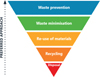 |
Fig. 1 Waste management hierarchy. |
Assessment of different disposal concepts with respect to a range of attributes.
4 Strategy for the management of very low-level waste in France
The French regulation considers various categories of radioactive waste. Very low-level wastes (VLLW) are mainly produced during decommissioning of nuclear facilities, and, to a lesser extent, during operation and maintenance. Activity levels of VLLW are usually below 100 Bq.g−1 and may even not be measurable. Up to recently, the French scheme for VLLW management has been thus almost purely linear and based on direct disposal in a dedicated and unique facility managed by Andra, Cires. Cires was licensed for the disposal of 650 000 m3 of VLLW and, as of 2023, 450 000 m3 of VLLW have been already disposed of. 80% of VLLW which are disposed of at Cires are metal waste, soil, and rubble. Alternative routes to Cires can be considered, such as incineration of combustible VLLW at Cyclife France treatment plant. In 2023, VLLW production forecast estimate is close to 2 400 000 m3, which is about 4 times the initial disposal capacity of Cires. It is then required to explore alternative(s) to direct disposal, taking into account the following aspects:
Robust knowledge of VLLW inventory,
Reduction of the volume of waste,
Promotion of circular economy and sustainable development approaches,
Timely planning of the needs for disposal capacities.
The mid-term solution to cope with the limited Cires storage capacity is to increase the licensed disposal capacity of Cires from 650 000 up to 950 000 m3, while keeping the current footprint of the disposal area and maintaining the same standards of safety and radiological protection. The project ACACI aims at extending the operation for an additional 12 to 15 years. Andra formally submitted a regulatory request in April 2023, which was accepted in July 2024. In addition to this project, considering that even a 950 000 m3 storage capacity at Cires will not be sufficient, Andra also began to work on a new disposal facility for VLLW to start operation around 2040, when Cires will reach saturation.
To save disposal capacity of Cires and the future VLLW disposal facility, it could be envisaged to develop VLLW disposal facilities on or near sites generating large amount of VLLW. This would also limit transport of VLLW from producers to Cires. CEA, EDF, Framatome and Orano, with Andra, are carrying out a feasibility study for such facilities. This includes a comparative analysis of environmental impact of disposal options based on a multi-criteria and multi-actors approach (Merad, 2020). Consideration could also be given to dispose of VLLW waste in conventional hazardous waste disposal facilities.
The French regulation enhances the importance of circular economy and waste hierarchy approaches and methods, e.g., reduce, reuse, recycle, etc. Disposal should be the less preferable option for waste management. As far as VLLW are concerned, Article D.542-86 of Code de l’Environnement indicates that VLLW management scheme should ‘preserves disposal capacity by taking into account the possibilities for increasing the density of the waste stored and for recycling certain types of VLLW from the environment’. Such a regulatory evolution facilitates moving from a linear to a more circular economy model with regards to the management of VLLW in France.
Studies on alternatives to disposal of VLLW at Cires, such as recycling, began in 2016, in line with the national roadmap for radioactive waste and materials management. While alternative approaches are investigated, technical aspects, economic constraints, radiological protection requirements, waste characteristics and environmental impacts have to be considered.
In February 2022, as a follow-up to a national debate on the national roadmap for radioactive waste and materials management, the regulatory framework for the management of VLLW did evolve, allowing for the recycling of metallic VLLW on a case-by-case basis. This evolution, allowing for recycling of metallic (only) VLLW, is a major shift in the French VLLW management framework. From a radiological protection perspective, a dose criterion of 10 µSv.y-1 is considered as the driving factor to assess adequacy of proposed industrial solutions. EDF is currently planning to build an industrial facility (Technocentre) to recycle metallic VLLW mainly produced by the dismantling of nuclear facilities in France (500 000 tons). Technocentre could produce metal ingots which will be used in conventional industry. It could process 25 000 tons of metal per year over 40 years of operation. Residues would be managed according to their characteristics and probably disposed of in Andra disposal facilities. A public debate on Technocentre was launched in 2024. The investment decision should be made in the coming years, and commissioning of the plant could start around 2030.
In addition to the Technocentre, other recycling projects are currently investigated in France. Electrical cables could account for 3% of the mass of VLLW which will be produced by nuclear facilities dismantling activities. The Orcade R&D project aims at separating electrical cable components for copper recycling. The industrial solution under consideration consists in developing a dedicated facility for separating the components of electrical cables (a radioactivity-free metal core and a peripheral polymer sheath with potentially surface contamination).
5 Treatment and recycling of steel in Sweden
While France is investigating the feasibility of metal recycling, treatment of contaminated metals by melting in Sweden started in 1987, as a joint initiative by the licensees and the regulators. Experience shows that between 5-10% of the total mass in a nuclear power plant consists of ferrous materials. Most of this steel material can be subject to clearance and safe recycling into new products on the conventional market. Over the years, the Cyclife Sweden facility and its operations have grown, including advanced equipment for decontamination, segmentation and treatment of large components, coming from Swedish or foreign utilities. More than 50 000 tons of metals have been melted. In addition, several thousands of tons have been cleared and released without homogenization by melting. More than 95% of the metals melted have been subject to clearance and recycling into new products.
One of the keys to have metals in a circular flow is to keep different materials and qualities apart, to the extent practically possible. The treatment methods have been extended and enhanced over the years, as well as the type of metals which can be subjected to treatment and clearance. The metal treatment process employs a structured multi-step approach to ensure that the material sent for treatment is safely processed, that the outcome can be accurately predicted, and that the metals are safely cleared and recycled back into the conventional industry. The approach contributes to stakeholders’ confidence in the recycling process. To achieve these goals, the approach incorporates several lines of defense, and the typical metal treatment process can be divided into the following steps:
Pre-shipment activities: the potential customer is asked to provide radiological and physical data for the objects and to confirm that the materials meet the metal acceptance criteria for treatment. Prior to shipment, a review of the data provided by the customer is performed.
Shipment and arrival of material for treatment: the metal is shipped to the treatment facility either as large components or as pre-segmented scrap metal loaded in ISO freight containers. Shipment can be performed using maritime, road or rail transportation.
Pre-melting operations: the set-up of the pre-melting operations varies, depending on the physical and radiological properties of the objects. It may contain disassembly and segmentation operations, segregation and sorting activities, as well as different types of decontamination operations aiming to reduce the radioactivity concentration and to remove paint and other surface coatings from the material. For certain key nuclides which easily alloy with the metal, like 6°Co, the residual activity in the material must be reduced below the clearance threshold values in the pre-treatment operations. The typical method is abrasive grit blasting, which effectively removes the surface of the materials and consequently the surface contamination. Visual inspection and verification measurements after the decontamination operations are essential.
Melting: melting in the induction furnaces at the facility homogenizes the metal and ensures the transfer of certain key nuclides from the metal to the slag or to the off-gas filters, while it densifies the material. Sampling is performed after the slag removal but prior to the casting of the molten metal. The samples taken are proven representative of the entire melting batch.
Post-treatment activities: the residual waste from treatment operations, approximately 5% of the initial weight, is collected and packed into drums or other suitable primary packages. The treatment campaign is recorded in both the waste management database and a comprehensive treatment report.
Clearance and release of the metals for recycling within the conventional metal industry for manufacturing of new products.
Return of secondary radioactive waste to customer.
Each melting batch receives a set of fully representative samples for the ingots produced. Those samples are analyzed and used as input for the clearance and release process. The produced ingots are released either without (unconditional clearance) or with conditions (conditional clearance). Clearance process may indeed differ with regards to traceability requirements, potential reuse of cleared metal ingots, requirement for disposal in conventional disposal facility, etc. Decontamination and melting of contaminated metals aiming for clearance in a nuclear licensed facility brings several advantages and is considered as a proven and robust method to convert a liability to an asset.
6 Releasing small amounts of waste in Czech Republic
Two Nuclear Power Plants (NPP) are in operation in the Czech Republic at Temelín and Dukovany. Low to medium level waste from operation and maintenance is continuously collected and sorted. Utilities estimated that about 70% of waste generated in the nuclear part is capable of being released in the long term. Most of it is released under a conditional release regime and unconditional release is applied to a very limited extent. The following description focuses on the management of slightly contaminated materials: plastics, oils, metals and building debris.
In practice, a preliminary sorting is based on the dose rate of the item or piece (below 1 µSv.h-1) and the type of material. Indeed, operational experience shows that 99% of that waste with a dose rate below 1 µSv.h-1 can be released. The remaining 1% is sent to the radioactive waste stream. After preliminary sorting, waste is measured in the MERLIN measuring device. Most of the time, minimum detected activity values are used for reporting and scenario calculations (unless a real activity value is measured). Current cost of the MERLIN volumetric measuring device for release is around 2 &z.euro;.kg-1. The costs of radiochemical analysis (determination of the radionuclide vector and derivation of correlation factors), packaging and transportation are 3.5 &z.euro;.kg-1 at Dukovany NPP and 6.1 &z.euro;.kg-1 at Temelín NPP (the difference is due to higher transport costs, as Temelín is 150 km away from Dukovany where the MERLIN device is located).
Plastics sorted according to the procedure are crushed on equipment at the public municipal landfill in Petrůvky and subsequently burned in the cement plant at Práchovice to produce heat. Alternative options for plastic recycling currently seem unrealistic, as it is not possible to ensure back tracking, which is required for conditional clearance. The total volume of plastics sorted and released this way since 2012 for both power plants is about 13 m3. The cement plant in Práchovice also takes oil free of charge as fuel and burn a total of approximately 20 m3 of oil per year.
Sludge is taken to a composting plant where it is treated by biological, chemical or thermal treatment. After treatment, ordinary sludge is mostly used in agriculture. But it is not possible to determine exactly where specific sludge ended up, i.e., to meet the conditional release requirement for back tracking. One should notice that although it is declared that sludge 137Cs content is below 3 Bq.kg-1, i.e., 30 times below the release level, yet the composting plant operator can be afraid of the declaration of activity.
The Cyclife facility in Sweden is used for metal recycling. The 6°Co content is usually the limiting factor for conversion by melting, but the metallic material can be left in the decay warehouse after conversion before released into circulation. Approximately 1 000 tons of metals were released at the Dukovany NPP between 2011 and 2023, of which 88% was structural steel, 6% special stainless steel, 3.5% aluminum and 2.5% copper from cables. About 180 tons of metals were released at the Temelín NPP during the same period, of which about 70% was structural steel, 15% special stainless steel, 3% aluminum and 12% copper from cables.
Building debris and rubble are transported in 200 L drums for measurement in the MERLIN facility and then to the Petrůvky landfill, where it is used as backfill material. Large volume of building debris may raise some issues related to the number of drums needed for transportation and the price for transportation (especially for debris from the Temelín NPP when it is transported over 150 km). Between 2011 and 2023, approximately 275 m3 of debris was released from Dukovany NPP and 36 m3 from Temelín NPP.
Overall, about 130 tons of below-limit waste is released annually from Temelin and Dukovany NPP. 75% consists of metals (recycled in metallurgy), construction debris (used as backfill at the inert waste dump) and oil (used as energy raw material for the cement plant). Sludge from the sewage treatment plant is released (after clearance measurements) to the compost plant. Attention is paid to plastics that are used for energy purposes (burned together with oil). The NPP staff has procedures that, based on simple measurements and operational experience, enable to adequately sort waste.
7 Discussion
The various case studies briefly presented in this article illustrate approaches considering circular economy aspects and related to operation and decommissioning of nuclear facilities and management of radioactive materials and waste.
Decommissioning and radioactive waste and material management strategies are strongly influenced by national contexts (i.e., existence of disposal facilities and their capacity, see the Casaccia case study for instance) and regulations (radiological protection criteria, clearance framework, etc.) as well as stakeholders’ views. Evolution of the regulatory framework may need to be considered to favor more circular approaches. This is outlined for instance when defining the way to reach the end-state at Trawsfynydd or in France when considering alternatives to disposal for VLLW management. In both cases, alternatives to direct disposal in dedicated facilities can be possible as a consequence of actual changes in regulations.
From a sustainable development perspective, materials generated during decommissioning and site remediation should be managed in accordance with a waste management hierarchy. Waste management hierarchy appears as a core principle to be applied to radioactive waste and material management. As pointed out by the IAEA (IAEA, 2022) with regards to site remediation, ‘The policy for remediation should include the […] establishment of a preference for technologies that take account of sustainability principles, for example in evaluating active and passive remedial options to ensure that they utilize the best available technologies and consider the waste management hierarchy’. Waste prevention should be the preferred option, followed by reuse, recycling, recovery and safe disposal. The European Commission could propose the implementation of waste management hierarchy principles as a regulatory requirement and support the development of methodologies and tools for the comparison of various alternative for the management of radioactive waste and materials.
Assessment of human, environmental, social and economic impacts for potential scenarios, decisions or strategies, considering not only radiological aspects, but all potential impacts and costs, is usually required and implemented to evaluate the overall benefits and disadvantages of alternative solution. Pros and cons are assessed against multiple criteria at the design stage of projects. The UK NDA Value Frameworks (NDA, 2021) provides a robust methodology for such framework, with a set of health, environmental, social and economic factors, including considerations on public and occupational exposures. Life cycle assessment methodologies are useful frameworks also and can provide useful criteria to compare relative benefits of different scenarios (Cristobal-Garcia, 2016).
From a radiological perspective, considering a large set of impacts in the decision-making process, including radiological ones, is consistent with the principle of optimisation, as stated in (ICRP, 2007): ‘the likelihood of incurring exposures, the number of people exposed, and the magnitude of their individual doses should all be kept as low as reasonably achievable, taking into account economic and societal factors. This means that the level of protection should be the best under the prevailing circumstances, maximising the margin of benefit over harm’. Depending on the exposure situation characteristics and prevailing circumstances, selection of the best protective option or strategy should not be solely based on radiological criteria. The ICRP has recently highlighted the links between the System of Radiological Protection and UN Sustainable Goals and the importance of considering these aspects when developing the future general recommendations (Laurier D. 2024; Rühm W., 2024). ICRP outlines ‘A more holistic approach than often adopted could allow/offer the carbon footprint to be considered in radiological protection principles. By way of example, recycling and reuse of lightly contaminated material is one way to save valuable resources, when proven that it would not contribute to any significant increase in the exposure of the public, workers, or the environment. Adding the dimension of sustainability to the optimisation principle could thus help to evaluate the level of protection for people and the environment with regard to the establishment of a circular economy and, in this way, support reduction of greenhouse gases and other pollutants and waste’. Case studies developed within the HARPERS project support this view from an operational perspective.
Importance of involving stakeholders in the decision-making process has proven effective in order to reach more sustainable decision. Technical dialog including licensees, regulatory bodies, waste management organizations, local stakeholders, etc. is needed to highlight advantages (and potential drawbacks) of novel approaches, and to demonstrate that more circular approaches are compatible with high nuclear safety and radiological protection standards, as highlighted by the recycling of metal in Sweden. Such approach has been successfully implemented and followed in France for the evolution of VLLW management strategy as described in Action TFA.4 of the 2022-2026 National Plan for Radioactive Waste and Material Management (PNGMDR, 2022).
While not directly covered in the case studies, the HARPERS project also highlights the benefit from conventional industry good practices, such as those described in the Sustainable Remediation Forum in United-Kingdom focusing on site remediation for instance (SURF UK, 2020). The organization described a framework for sustainable remediation, similar to the UK NDA Value Framework, and based on the following principles: (1) protection of human health and the wider environment; (2) safe working practices; (3) consistent, clear and reproducible evidence based decision-making; (4) report keeping and transparent reporting; (5) good governance and stakeholder involvement; (6) sound science.
Moving towards circular economy approaches requires not only adequate decision-making framework based on multiple criteria, but also dedicated tools and good practices sharing. The HARPERS project recommended to the European Commission the development of such tools which could be used by various stakeholders to assess and discuss radiological consequences or impacts associated with the recycling of materials (clearance) or strategy for site remediation. The European Commission is also invited to update RP 89 and RP 122 reports (EC 1998, EC 2000). Development of R&D activities should also be encouraged such as in Belgium, where the recycling of conditionally cleared concrete has been investigated, but also France (recycling of copper from electric cables). The Czeck case study also highlights R&D areas of interest. Recycling of such materials, based on industrial good practices and given the carbon footprint of concrete production, could be highly beneficial.
Acknowledgments
The authors would like to address their warm thanks to all HARPERS consortium partners.
Funding
This research received funding from the Euratom research and training program 2021-2027 under Grant Agreement n°101060028.
Conflicts of interest
The authors declare that they have no conflict of interest in relation to this article.
Data availability statement
No new data were generated or analysed in support of this research article.
Author contribution statement
Ludovic Vaillant led the overall conception of the article, coordinated the scientific content, conducted the analysis of the case studies, and wrote the full manuscript. M. Belin, A. Larsson, M. Maître, S. Nijst, A. Norture, R. Sciaqua Rossella, R. Trtilek, V. Wasselin, S. Wickham, and F. Pancotti contributed through critical review of the draft manuscript and provided valuable comments that improved the analysis and presentation of the results. All authors read and approved the final version of the manuscript.
Ethics approval
Ethical approval was not required.
Informed consent
This article does not contain any studies involving human subjects.
References
- Article R. 1333- 6-1 du code de la santé publique, créé par le décret 2022-174 du 14 février 2022 relatif à la mise en œuvre d’opérations de valorisation de substances faiblement radioactives. https://www.legifrance.gouv.fr/codes/article_lc/LEGIARTI000050932504. [Google Scholar]
- Brundtland GH. 1987. Our Common Future: Report of the World Commission on Environment and Development. Geneva, UN-Document A/42/427 The Brundtland Report. https://sustainabledevelopment.un.org/content/documents/5987our-common-future.pdf. [Google Scholar]
- Cristobal-Garcia J, Pant R, Reale F, Sala S. 2016. Life Cycle Assessment for the Impact Assessment of Policies. Publications Office. https://data.europa.eu/doi/10.2788/318544. [Google Scholar]
- Cristobal-Garcia J, Pant R, Reale F, Sala S 2016. Life Cycle Assessment for the Impact Assessment of Policies. Publications Office. https://data.europa.eu/doi/10.2788/318544. [Google Scholar]
- Laurier D. et al., 2025. Workshop on the future of radiological protection. Radioprotection 60 (1). https://doi.org/10.1051/radiopro/2024058. [Google Scholar]
- Management of radioactive waste from decommissioning of nuclear sites: Guidance on Requirements for Release from Radioactive Substances Regulation, Version 1.0. SEPA, Environment Agency, Natural Resources Wales, July 2018. https://www.sepa.org.uk/media/365893/2018-07-17-grr-publication-v1-0.pdf. [Google Scholar]
- Merad M, et al., 2020. « Une approche multi-experts, multi-acteurs et multicritères: exercice d’application à la gestion soutenable des déchets radioactifs de très faible activité (TFA) ». Congrès Lambda Mu 22 - Les risques au cœur des transitions. https://hal.science/hal-03483779v1/document. [Google Scholar]
- OPEC-2 Case Study on Repurposing and Refurbishing of existing buildings in the context of Circular Economy, S. Cardellicchio, F. Pancotti, R. Sciacqua, M. Pietrobon at “Remtech Europe” 23–27 September 2024. [Google Scholar]
- Plan national de gestion des matières et déchets radioactifs 2022-2026, Ministère de la Transition Énergétique, 2022. https://www.andra.fr/sites/default/files/2023-01/PNGMDR_2022.pdf. [Google Scholar]
- Radiation protection 89, Recommended radiological protection criteria for the recycling of metals from the dismantling of nuclear installations. Directorate Genral Environment, Nuclear Safety and Civil Protection, 1998. https://op.europa.eu/en/publication-detail/-/publication/364496d2-51aa-48b0-b6e8-457ba23fb70f. [Google Scholar]
- Radiation protection 122, Practical use of the concepts of clearance and exemption − Part I : Guidance on general clearance levels for practices, Directorate General for the Environment, 2000. https://op.europa.eu/en/publication-detail/-/publication/49e136b7-6f8d-42b3-bfcb-21ce82730f43. [Google Scholar]
- Remediation Strategy and Process for Areas Affected by Past Activities or Events, General Safety Guide No. CSG-15, IAEA, 2022. https://www-pub.iaea.org/MTCD/Publications/PDF/PUB1969_web.pdf. [Google Scholar]
- Rühm W, Applegate K, Bochud F et al., 2024. The system of radiological protection and the UN sustainable development goals. Radiat Environ Biophys 63: 469–482. https://doi.org/10.1007/s00411-024-01089-w. [Google Scholar]
- Supplementary Report 1 of the SURF UK Framework: A General Approach to Sustainability Assessment for Use in Achieving Sustainable Remediation, Contaminated Land: Application in Real Environment. (CLAIRE), July 2020. https://claire.co.uk. [Google Scholar]
- The 2007 Recommendations of the International Commission on Radiological Protection, ICRP Publication 103. Ann ICRP 37 (2-4), 2007. https://journals.sagepub.com/doi/pdf/10.1177/ANIB_37_2-4. [Google Scholar]
- The NDA Value Framework, August 2021, v2.0. https://assets.publishing.service.gov.uk/media/6155a8be8fa8f5297a62a046/The_NDA_Value_Framework_Aug21.pdf. [Google Scholar]
- Wickham S et al. 2024. Trawsfynydd NPP Decommissioning Site: Demonstrating Long-Term Environmental Safety of First-of-a-kind On-Site Disposals, WM2024 Conference, March 10th to 14th 2024, Phoenix, Arizona, USA. [Google Scholar]
Cite this article as: Vaillant L, Belin M, Larsson A, Maître M, Nijst S, Norture A, Sciaqua Rossella R, Trtilek R, Wasselin V, Wickham S, Pancotti F. 2026. Dismantling of nuclear facilities, radioactive waste and materials management, circular economy and sustainable development. Radioprotection 61(1): 22–29. https://doi.org/10.1051/radiopro/2025034
All Tables
All Figures
|
Fig. 1 Waste management hierarchy. |
| In the text | |
Current usage metrics show cumulative count of Article Views (full-text article views including HTML views, PDF and ePub downloads, according to the available data) and Abstracts Views on Vision4Press platform.
Data correspond to usage on the plateform after 2015. The current usage metrics is available 48-96 hours after online publication and is updated daily on week days.
Initial download of the metrics may take a while.